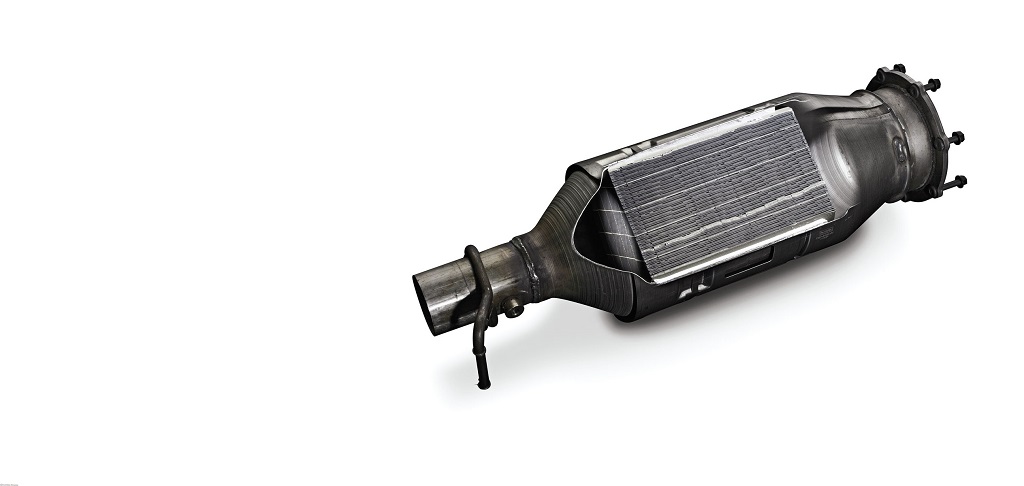
What is DPF regeneration?
DPF regeneration is the process of burning trapped soot inside a Diesel Particulate Filter to turn it into much smaller quantities of CO2 and ash. Without regeneration the filter would block within a few hundred miles. There are three types: passive, active, and forced.
1. Passive regeneration
Happens automatically when the exhaust gets hot enough on its own — typically a long, high-speed motorway run with sustained engine load. Exhaust temperatures of 350-500°C are usually enough for the catalytic coating on the filter to oxidise soot to CO2 in the background. The driver notices nothing.
2. Active regeneration
Triggered by the engine ECU when the soot load passes a threshold (usually 45-55%). The ECU injects extra fuel late in the combustion cycle. Unburned fuel ignites in the exhaust catalyst and raises temperature to ~600°C, hot enough to burn the trapped soot. An active regen takes 10-20 minutes of continuous driving (no stop-start). Symptoms you might notice:
- Cooling fan running after you stop
- Slight rise in idle RPM
- Hot smell from the exhaust
- Brief drop in fuel economy
- Temporary increase in exhaust note
If you interrupt an active regen (by switching off too soon), the cycle restarts next time. Repeated interrupted regens cause fuel dilution of the engine oil and accumulating soot load.
3. Forced regeneration (workshop active regen)
When soot load passes ~75% the car normally enters limp mode and refuses self-regeneration. A garage uses diagnostic equipment to command the ECU to run a forced active regen at the workshop. It is the same process as active regen but controlled and supervised. See our forced regeneration service.
When forced regen will NOT work
- Ash load is too high (regen does not remove ash). Needs an off-car clean.
- Soot load above ~85%. Risk of substrate melt during forced regen.
- Mechanical damage: cracked or melted substrate.
- Underlying engine fault that will re-soot the filter immediately.
Why drivers keep getting blocked DPFs
- Mostly short, low-speed urban driving — engine never gets hot enough for passive regen.
- Frequent active regens get interrupted because the driver switches off before the cycle completes.
- EGR or injector faults producing excessive soot.
- Worn turbo letting oil into the exhaust (oil contaminates the substrate).
What to do if your DPF light comes on
Drive at 50+ mph at 2,000+ rpm for 20 minutes if road conditions allow. This usually completes an active regen. If the light does not clear, book a forced regen or DPF clean. Do not ignore — leaving it leads to a fully blocked DPF and an expensive replacement.